Key Takeaways
- AARO's UAP caseload has surged past 2,000 reports dating back to 1945 — up from 1,600 in late 2024
- A secret Pentagon-sponsored workshop in August 2025 brought together 40 government, academic, and civilian researchers to standardise UAP data collection
- AARO's new 17-page whitepaper reveals plans to use AI and machine learning for pattern recognition across military and civilian UAP datasets
- Despite government momentum, fewer than 1% of university faculty have ever conducted UAP research — and 28% say they'd vote against a colleague's tenure for doing so
📑 Table of Contents
The Numbers Keep Climbing
While headlines chased the alien.gov domain registrations and Trump's disclosure promises, the Pentagon's official UAP investigative body was quietly doing something far more significant: building the infrastructure for a permanent scientific investigation.
The All-domain Anomaly Resolution Office — AARO — now carries a caseload exceeding 2,000 reports dating back to 1945. That figure has grown by at least 400 cases since late 2024, when officials last reported a total of around 1,600. In the fiscal year 2024 reporting period alone, AARO received 757 new reports between May 2023 and June 2024.
Not all of those cases point to anything exotic. AARO has resolved hundreds to mundane explanations: balloons, birds, drones, satellites, and aircraft. But approximately 1,000 reports lack sufficient data for analysis and sit in an active archive — cases that could be reopened if new evidence surfaces. And a smaller subset, the cases AARO's own director Dr Jon Kosloski has called "the truly anomalous," remain stubbornly unexplained.
Three reports describe military pilots being trailed or shadowed by UAP. Two others flagged direct flight safety concerns. These are not fringe claims from anonymous witnesses — they are reports filed through official Department of Defense channels by trained military aircrews.
Inside the Secret Workshop
In early August 2025, something unusual happened in the Washington, D.C. area. Roughly 40 researchers — drawn from government agencies, universities, and independent civilian organisations — gathered for a private, invite-only workshop sponsored by AARO and hosted by Associated Universities, Inc. (AUI).
The event was not announced publicly. No press releases went out. It only came to light in March 2026 when AARO published a 17-page whitepaper describing the proceedings and their findings.
The workshop's focus was narrative data — the written and verbal accounts that make up the bulk of UAP reporting. When a military pilot files a sighting report, or a civilian phones the National UFO Reporting Center (NUFORC), the resulting account is rich in descriptive detail but notoriously difficult to analyse at scale. How do you compare thousands of witness statements across decades, from different agencies, in different formats, with different classification levels?
That was the question on the table.
NUFORC's Chief Technical Officer, Christian Stepien, presented on the organisation's history, mission, and database — one of the most comprehensive collections of civilian UFO narrative data in existence. He also joined a panel discussion titled "Harmonising Qualitative and Quantitative Perspectives on Narrative Data," moderated by Dr Gretchen Stahlman from Florida State University.
The fact that AARO invited NUFORC — an independent civilian organisation — to sit alongside government analysts and university researchers is itself remarkable. For decades, civilian UFO databases and government investigations existed in entirely separate worlds. This workshop was an explicit attempt to bridge that gap.

What the Whitepaper Reveals
AARO's 17-page whitepaper, published quietly online in March 2026, lays out the workshop's "cross-cutting findings" — and they read like a blueprint for a permanent UAP research programme.
Standardised reporting templates. The whitepaper calls for common templates with robust metadata capturing time, location, provenance, morphology, and contextual details. Right now, a sighting report from a Navy fighter pilot and a report from a civilian in Ohio look nothing alike. AARO wants them to be comparable.
Cross-dataset linking. Military data, civilian data, archival records, environmental monitoring, and technical sensor readings all need to be integrated — while balancing interoperability with privacy, ethics, and classification constraints. This is an enormous technical challenge, and the fact that AARO is openly discussing it suggests the ambition goes well beyond a temporary task force.
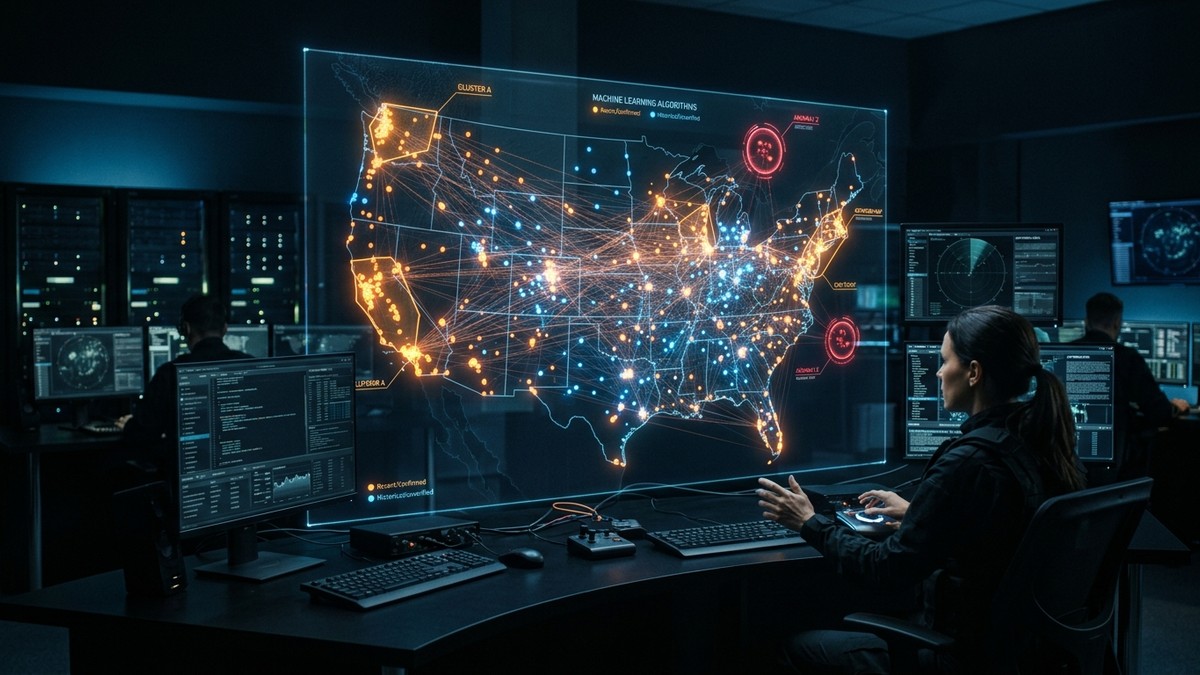
AI and machine learning. Perhaps the most striking recommendation: AARO wants to deploy artificial intelligence tools to analyse large-scale UAP datasets for pattern recognition. The whitepaper is careful to note that AI must be deployed carefully to avoid bias and hallucination, and that human oversight remains critical. But the direction is clear — they want to use machine learning to surface patterns that human analysts might miss across thousands of reports spanning eight decades.
Credibility filtering. Not every report is equally reliable. The whitepaper recommends automated methods to filter reports and surface the most promising cases for deeper investigation — a triage system for the flood of incoming data.
Pentagon spokesperson Sue Gough confirmed that "AARO hopes to convene future workshops and collaborative opportunities, as needed, to foster an interdisciplinary community for UAP analysis."
The Academic Stigma Problem
There is a bitter irony in the Pentagon's push for academic collaboration. While the government is actively seeking university researchers to help study UAP, the academic world remains largely hostile to anyone who takes the subject seriously.
A peer-reviewed study published in Humanities and Social Sciences Communications surveyed 1,460 faculty members across 14 disciplines at 144 major U.S. research universities. The researchers — Marissa Yingling, Charlton Yingling, and Bethany Bell — found a striking disconnect.
Most faculty believed UAP research was important. Curiosity outweighed scepticism in every single discipline surveyed. Nearly one in five had personally observed something aerial they could not identify.
Yet fewer than 1% had ever conducted any UAP-related research.
The reason was not intellectual dismissal. It was fear. A 2024 follow-up study found that roughly 28% of faculty said they might vote against a colleague's tenure case for conducting UAP research — even when they personally believed the topic warranted study. Researchers reported being warned to "be careful." They cited fears of losing funding, facing ridicule from colleagues, and suffering career damage.
The result is a paradox: the Pentagon is building a research network and publishing whitepapers calling for academic participation, while the academic institutions it needs are punishing anyone who answers the call.
No major American university has established a dedicated UAP research centre. No federal science agency offers competitive grants for UAP inquiry. No doctoral programme trains researchers in UAP methodology. The University of Würzburg in Germany became the first Western university to formally recognise UAP as a legitimate research subject — in 2022. In the United States, the stigma endures.
Hegseth and the Disclosure Directive
All of this is unfolding against the backdrop of President Trump's February 2026 executive order directing the Pentagon and other federal agencies to begin releasing government files related to UAP and extraterrestrial life.
Defense Secretary Pete Hegseth addressed the directive publicly for the first time during a stop on his "Arsenal of Freedom" tour in Colorado. "We're going to be in full compliance with that executive order," Hegseth said. "[We're] eager to provide that for the president."
But he tempered expectations. "Expectations are going to be high, right? I don't want to over-promise and under-deliver." He added that the Department of War was "working in close coordination with the White House and across federal agencies to consolidate existing UAP records collections and facilitate the expeditious release of never-before-seen UAP information."
No timeline has been given. And AARO's own position remains unchanged: no evidence of extraterrestrial activity has been found in any cases examined to date. Whether the disclosure process will include data from programmes outside AARO's remit — like the alleged Immaculate Constellation USAP — remains an open question.
What Happens Next
The fiscal year 2026 National Defense Authorization Act (NDAA) has added teeth to the process. New provisions require AARO to provide expanded congressional briefings, including details on "the number, location, and nature" of any UAP intercepts conducted by NORAD and NORTHCOM. Classification guides must appear in AARO's next annual report. The office is also required to brief lawmakers on UAP intercept operations dating back to 2004 — the year of the USS Nimitz Tic-Tac encounter.
AARO's 2025 annual report has not yet been published. Neither has the long-delayed second volume of its historical review of government involvement with UAP. Both are expected to be closely watched.
What is clear is that the infrastructure is being built. A permanent office with a growing caseload. A network of government, academic, and civilian collaborators. A whitepaper laying out standardised methodology. AI tools being developed for pattern recognition. Congressional mandates requiring transparency.
Whether any of this produces answers — or simply more questions — depends on what the data actually shows. But for the first time, the machinery exists to find out.