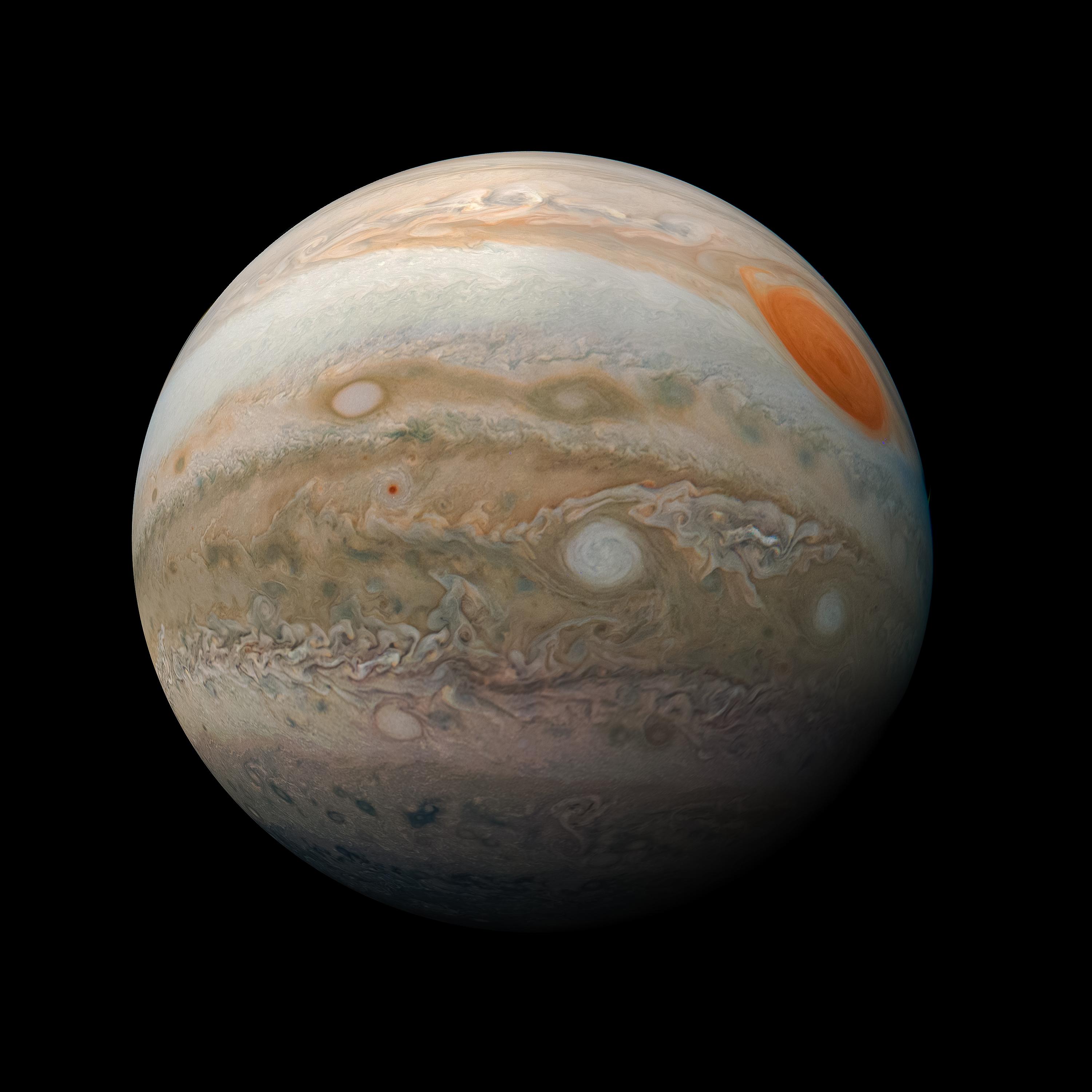
Key Takeaways
- Astronomers discovered 15 new moons this week — 11 orbiting Saturn and 4 orbiting Jupiter
- Saturn now holds the solar system record with 285 confirmed moons; Jupiter has 101
- The solar system's total known moon count is now 442 across all planets
- All 15 new moons are tiny — roughly 3–5 km across — and far too faint for backyard telescopes
- Most are irregular moons in retrograde orbits, likely fragments from ancient collisions or captured asteroids
📑 Table of Contents
A Quiet Announcement That Changed the Solar System
On 16 March 2026, the Minor Planet Center — the official record-keeper for small solar system bodies run by the International Astronomical Union — quietly published a series of circulars announcing the discovery of 15 new moons. Eleven of them orbit Saturn. Four orbit Jupiter.
There was no press conference. No dramatic NASA broadcast. Just a few lines in the scientific record. And yet, in those few lines, the solar system grew again.
Saturn now has 285 confirmed moons — the most of any planet in the solar system. Jupiter sits at 101. Together with moons around Uranus, Neptune, Mars, and Earth, the total known moon count in our solar system has reached 442.
That number will keep climbing. We are living through a golden age of moon discovery, and the two gas giants at the heart of our solar system still have secrets hiding in their gravitational grip.
The 11 New Moons of Saturn
Saturn's eleven new moons were discovered by a team led by Edward Ashton of the University of British Columbia. The team spent years patiently analysing images captured by the Canada-France-Hawaii Telescope (CFHT) between 2019 and 2023, looking for the faint, slow-moving smudges that betray a small moon drifting at the edge of Saturn's gravitational influence.
The new moons are designated S/2020 S 45–48 and S/2023 S 51–57 — eight designations covering the eleven objects, reflecting the different observation windows when they were first photographed. Each is tiny: no more than 5 kilometres across. None have been officially named yet.
What makes them interesting is their behaviour. Almost all of Saturn's 11 new moons move in retrograde orbits — that is, they orbit Saturn in the opposite direction to the planet's own rotation. This is a strong sign that they are not original companions of Saturn that formed alongside it. Instead, they are almost certainly one of two things: captured asteroids that strayed too close to Saturn billions of years ago and were pulled in by its gravity, or collision fragments — debris left over from a larger moon that was shattered by an ancient impact somewhere in Saturn's outer system.
Ashton and his team believe the retrograde predominance points toward a relatively recent (in astronomical terms) major collision in Saturn's outer moon population — one that created a spray of debris now orbiting in slowly decaying paths.
The 4 New Moons of Jupiter
Jupiter's four new moons were discovered by a separate team led by Scott Sheppard of the Carnegie Institution for Science in Washington DC — one of the world's most prolific moon hunters, with over 200 solar system moon discoveries to his name.
Sheppard's team used data from the Las Campanas and Cerro Tololo observatories in Chile, plus the Subaru Telescope in Hawaii, gathered across a fifteen-year window from 2011 to 2026. The four new moons are:
- S/2011 J 4 — belongs to the Himalaya dynamical group, a cluster of moons with similar orbital properties
- S/2011 J 5 — belongs to the Carme group, a family of moons thought to originate from a single ancient collision
- S/2018 J 5 — belongs to the extensive Ananke group
- S/2024 J 1 — the most recently observed, confirmed from 2024 data, group membership still under analysis
Like Saturn's new moons, all four are irregular — small, dark, and in inclined orbits that suggest capture rather than formation alongside Jupiter. They are each roughly 3 kilometres in diameter: roughly the size of a small English market town, drifting silently hundreds of millions of kilometres from the Sun.
What Are Irregular Moons?
The term "irregular moon" has nothing to do with shape. It refers to orbital characteristics. A regular moon has a nearly circular orbit close to its planet's equatorial plane, moving in the same direction as the planet's spin. The Galilean moons of Jupiter — Io, Europa, Ganymede, and Callisto — are regular moons. So is Titan, Saturn's enormous and exotic companion.
Irregular moons are different. They have:
- Large, elliptical orbits that take them far from the planet
- High orbital inclinations — they travel at steep angles relative to the equatorial plane
- Retrograde motion in many cases — orbiting "backwards" relative to planetary rotation
- Very small sizes — typically just a few kilometres across
These characteristics all point to the same origin: these moons did not form in place. They were captured. Either gravitational interactions with another large body allowed them to be pulled into stable orbits, or they are fragments of larger objects that broke apart under tidal forces or in ancient collisions.
Irregular moons are the scars of the solar system's violent early history — and both Jupiter and Saturn have accumulated hundreds of them.
The Moon Race: Saturn vs Jupiter
For most of human history, Jupiter was assumed to hold the moon record. It is the largest planet and has the most powerful gravity in the solar system after the Sun. When Galileo first saw four moons around Jupiter through his telescope in 1610, they seemed to represent a solar system in miniature.
But Saturn has been quietly accumulating. As telescope technology improved and sky surveys became deeper and more systematic, moon after moon was found orbiting Saturn — most of them tiny, dark, and slow-moving in the outer reaches of its gravitational well.
| Planet | Confirmed moons (2026) | Change this week |
|---|---|---|
| Saturn | 285 | +11 |
| Jupiter | 101 | +4 |
| Uranus | 28 | — |
| Neptune | 16 | — |
| Mars | 2 | — |
| Earth | 1 | — |
Saturn first overtook Jupiter in the moon count in 2023, when a survey using the same CFHT telescope found 62 new Saturnian moons in a single announcement. Since then, Saturn has continued to pull ahead. The gap is now 184 moons — and growing.
That gap reflects a difference in the outer moon populations of the two planets. Saturn sits further out in the solar system, in a slightly more dynamically active region that may have captured more passing bodies in the early solar system. Its ring system, too, suggests a violent history of collisions that may have created large numbers of small debris objects now orbiting as irregular moons.
Jupiter, by contrast, has a more settled outer system — but Sheppard and others believe many more moons remain to be found, simply awaiting a deep enough survey.
Can You See Them?
The honest answer: no. Not from your back garden, and not even with most amateur telescopes.
The new moons range in brightness from magnitude 25 to magnitude 27. For reference, the human eye can detect objects to about magnitude 6 or 7 on a very dark night. The four Galilean moons of Jupiter are around magnitude 5–6 — just visible to the naked eye under ideal conditions. Saturn's Titan reaches magnitude 8.5.
Magnitude 25–27 requires not just a large telescope, but long-exposure imaging with a CCD camera and precise tracking — essentially, a professional or serious semi-professional observing setup. These are not worlds you will ever see as points of light from your driveway.
But that does not make them any less real. They are out there, right now — dark chips of ancient rock and ice, tumbling through the darkness at tens of thousands of kilometres per hour, locked in orbits that have barely changed in billions of years. Fifteen new worlds added to the catalogue in a single week.
The solar system is not a fixed, fully-charted place. It is still being explored. And in the most routine-sounding announcements from observatories in Hawaii and Chile, it keeps growing.
🔭 Want to see Jupiter and Saturn for yourself? Check our guide to observing Jupiter throughout 2026 → and our Saturn observing guide → for the best nights to look up this year.