Key Takeaways
- Planet parades occur when multiple planets appear close together in the sky from our perspective on Earth
- The best planet parade of 2026 occurs in late February through early March, featuring up to 6 planets
- You don't need a telescope - most planet parades are visible to the naked eye from dark sky locations
- Venus and Jupiter are the brightest and easiest to spot, making them perfect 'anchor' planets for finding the others
📑 Table of Contents
Have you ever looked up at the night sky and wondered what it would be like to see all the planets lined up like cosmic pearls on a string? Well, 2026 is giving us a spectacular opportunity to witness exactly that phenomenon – a dazzling planet parade!
Whether you're a seasoned stargazer or someone who just enjoys looking up at the stars occasionally, this celestial event is something you won't want to miss. The best part? You don't need a telescope, expensive equipment, or a degree in astronomy. Just your eyes, a clear sky, and a bit of knowledge about when and where to look.
What is a Planet Parade?
Let's start with the basics. A "planet parade" (sometimes called a planetary alignment) happens when several planets appear close together in the sky from our perspective here on Earth. It's important to understand that the planets aren't actually bunching up in space – they're still millions of miles apart, following their usual orbits around the Sun.
Think of it like this: imagine you're standing in a field, and there are trees at different distances from you – some close, some far away. If you move to just the right spot, all those trees might appear to line up from your viewpoint, even though they're nowhere near each other in reality. That's essentially what's happening with a planet parade!
The term "parade" is used because it looks like the planets are marching across the sky in formation. Depending on the specific alignment, you might see them spread across a portion of the sky, or clustered more tightly together.
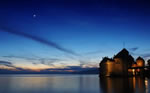
Clear, dark skies provide the best conditions for spotting the planetary parade
When to See the 2026 Planet Parade
The most spectacular planet parade of 2026 takes place in late February through early March, with the peak viewing period occurring around February 28 to March 2.
Here's your viewing schedule:
Best Viewing Window: February 28 - March 2, 2026
- Time: 5:30 AM - 6:30 AM (local time, before sunrise)
- Direction: Look toward the eastern and southeastern horizon
- Visibility: Up to 6 planets potentially visible in a single morning
Extended Viewing Period: February 20 - March 10
While the parade is most concentrated at the end of February, you'll still be able to see most of the planets throughout this extended period. The configuration will shift slightly each day as the planets continue their orbital dance.
The early morning timing is crucial. You'll need to wake up before sunrise – yes, we know that's not everyone's favorite thing! But trust us, seeing half a dozen planets spread across the pre-dawn sky is absolutely worth setting that alarm a bit earlier.
Which Planets Will Be Visible?
During the 2026 planet parade, you'll have the chance to see up to six planets in a single viewing session. Let's meet the stellar lineup from easiest to most challenging to spot:
Venus - The Morning Star ⭐
Magnitude: -4.2 (extremely bright!)
Venus will be the undisputed queen of this parade. Shining brilliantly in the eastern sky, she'll be impossible to miss. In fact, Venus will be so bright that you might spot it even before the sky gets fully dark. Look for an intense, steady white "star" that doesn't twinkle.
Pro tip: Venus will be your "anchor planet" – find this one first, and you can use it as a reference point to locate the others!

Venus, the brightest planet and your anchor for finding the parade
Jupiter - The Giant ⭐
Magnitude: -2.0 (very bright)
Jupiter, the giant of our solar system, will be the second-brightest planet in the parade. You'll find it relatively high in the southern sky during the early morning viewing window. It appears as a steady, cream-colored "star" that's noticeably brighter than any actual star nearby.
Even basic binoculars will reveal Jupiter's four largest moons (called the Galilean moons) as tiny points of light near the planet!
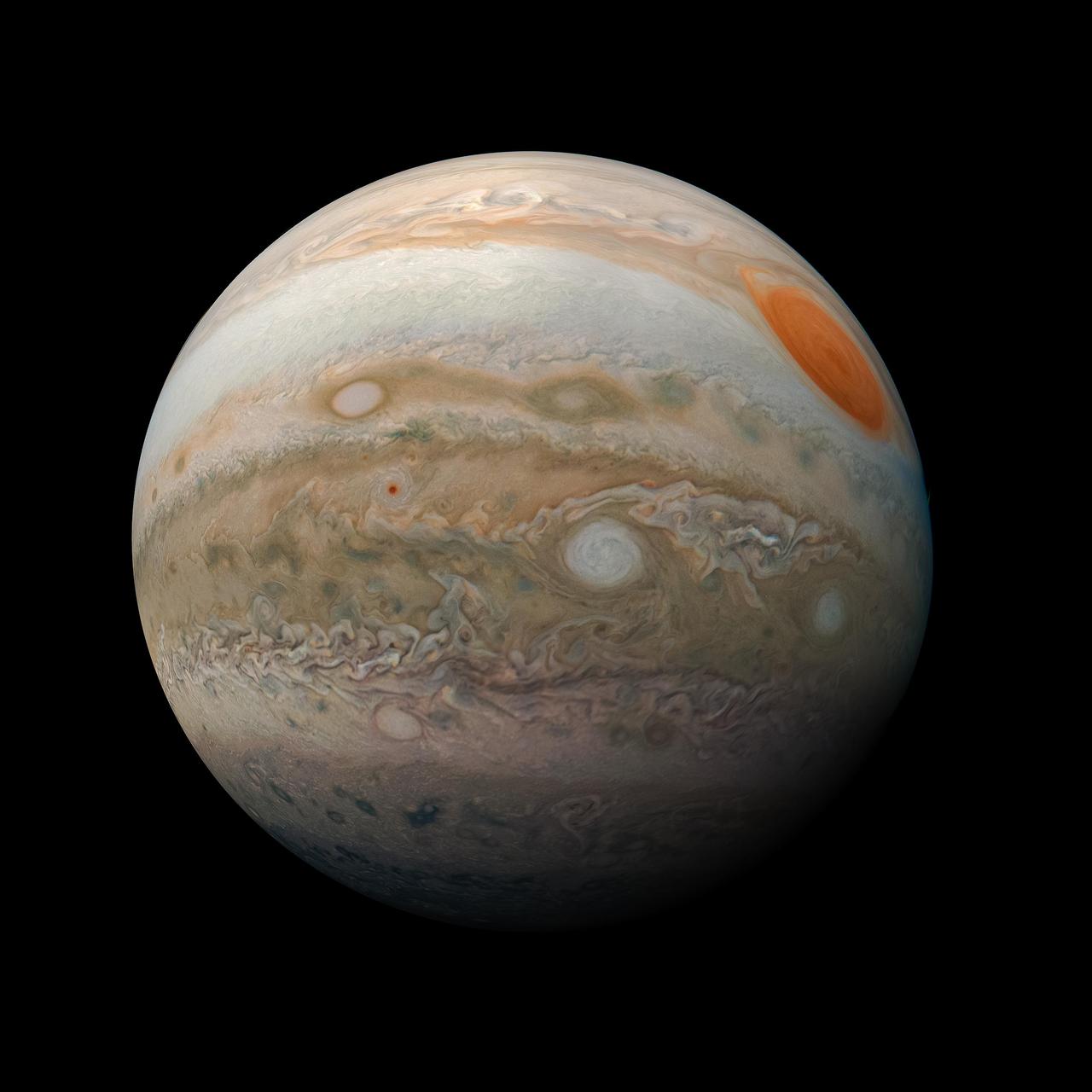
Jupiter, the largest planet and second-brightest in the parade
Saturn - The Ringed Wonder ⭐
Magnitude: +0.8 (moderately bright)
Saturn will be visible in the southeastern sky, appearing as a golden-yellow "star." While not as bright as Venus or Jupiter, Saturn is still easily visible to the naked eye and won't twinkle like stars do.
If you have access to even a small telescope (70mm or larger), this is your chance to see Saturn's magnificent rings! The rings will be at a favorable viewing angle in 2026, making them easier to see than in recent years.

Saturn's magnificent rings will be well-positioned for viewing in 2026
Mars - The Red Planet ⭐
Magnitude: +1.3 (moderate)
Mars will add a distinctive ruddy color to the parade. Look for its characteristic orange-red hue in the southeastern sky. While fainter than the previous three planets, Mars is still quite easy to identify thanks to its unique color – no star looks quite like Mars!

Mars' distinctive red-orange color makes it easy to identify in the night sky
Neptune - The Blue Giant 🔭
Magnitude: +7.9 (requires optical aid)
Neptune will be technically part of the alignment, but you'll need binoculars or a telescope to see it. Even then, it will appear as just a tiny blue-green dot. This one is for the more dedicated observers!
Equipment needed: At minimum, 10x50 binoculars from a dark location. A finder chart will be essential.
Uranus - The Ice Giant 🔭
Magnitude: +5.8 (dark sky or binoculars needed)
Uranus sits right on the edge of naked-eye visibility under perfect dark-sky conditions. Most people will need binoculars to spot it reliably. It appears as a pale blue-green dot and won't show any detail without a powerful telescope.
Equipment needed: Binoculars recommended, or exceptionally dark skies for naked-eye viewing.
How to Find the Planets
Ready to spot this cosmic lineup? Here's your step-by-step guide:
Step 1: Find Venus (Your Anchor Point)
- Wake up about 60-90 minutes before sunrise
- Go outside and let your eyes adjust to the darkness (5-10 minutes)
- Look toward the eastern horizon
- Find the brightest "star" – that's Venus!
Step 2: Locate Jupiter
- From Venus, look higher and somewhat to the south (right if you're facing east)
- Find the next brightest steady "star" – that's Jupiter
- Jupiter will be noticeably higher in the sky than Venus
Step 3: Find Saturn
- Saturn will be between Venus and Jupiter in the southeastern sky
- Look for a golden-yellow "star" of moderate brightness
- It won't twinkle, which helps distinguish it from actual stars
Step 4: Spot Mars
- Mars will be near Saturn, possibly slightly higher in the sky
- Its distinctive orange-red color makes it easy to identify
- The color is the key – no star looks quite that red!
Step 5: Challenge Mode - Uranus and Neptune
For these outer planets, you'll want:
- Binoculars (at minimum 10x50)
- A detailed star chart or astronomy app showing their exact positions
- Dark skies away from city lights
- Patience!
Recommended apps:
- SkySafari (iOS/Android)
- Stellarium Mobile (iOS/Android)
- Star Walk 2 (iOS/Android)
These apps will show you exactly where to point your binoculars. Uranus and Neptune won't look like much – just faint bluish dots – but there's something special about seeing these distant ice giants with your own eyes!
Best Viewing Locations
The planet parade will be visible from anywhere on Earth with clear skies, but some locations will offer better views than others.
What Makes a Good Viewing Location?
1. Clear Eastern Horizon
Since the planets will be in the eastern and southeastern sky, you need an unobstructed view in that direction. Hills, buildings, or trees blocking the east will hide some or all of the planets.
Ideal: Open fields, beaches, elevated viewpoints facing east
2. Dark Skies
While the bright planets (Venus, Jupiter, Saturn, Mars) can be seen even from light-polluted cities, you'll get a much better experience from darker locations. For Uranus and Neptune, dark skies are essential.
Ideal: Rural areas, designated dark sky locations, away from city lights
3. Good Weather
This one's out of your control, but check weather forecasts! You need clear skies – even thin clouds can obscure the fainter planets.
Pro tip: Have a backup date or two. The parade lasts for several days, so if one morning is cloudy, try the next!
Can I See It From the City?
Yes! The four brightest planets (Venus, Jupiter, Saturn, and Mars) can absolutely be seen from urban and suburban areas. You won't see as many stars in the background, and Uranus/Neptune will be impossible, but the main parade will still be visible.
Tips for Urban Observers:
- Find a park or open area away from direct streetlights
- Use buildings to block bright lights from your line of sight
- Let your eyes adapt to the darkness for at least 10 minutes
- Consider taking a short drive to the outskirts of town for better views
Photography Tips
Want to capture this celestial event? Here's how to photograph the planet parade, from smartphone to DSLR:
Smartphone Photography
Yes, you can photograph planets with your phone! Here's how:
Equipment:
- Smartphone with night mode or manual controls
- Tripod or stable surface (essential!)
- Camera app with manual settings (like ProCamera or Camera FV-5)
Settings:
- ISO: 800-3200
- Exposure time: 3-10 seconds
- Focus: Manual, set to infinity
- Turn OFF flash
Technique:
- Mount phone securely on tripod
- Use timer or Bluetooth remote to avoid shaking
- Take multiple shots with different settings
- Focus on capturing Venus and Jupiter – they'll be brightest
Reality check: Your phone will capture bright planets as dots of light. The image won't look like NASA photos, but you'll have a memento of the event!
DSLR/Mirrorless Camera Photography
With a proper camera, you can capture stunning images:
Equipment:
- DSLR or mirrorless camera
- Wide-angle lens (14-24mm ideal, up to 50mm works)
- Sturdy tripod
- Remote shutter release or intervalometer
Settings:
- Shooting mode: Manual (M)
- ISO: 1600-6400
- Aperture: f/2.8-f/4 (as wide as your lens allows)
- Shutter speed: 10-20 seconds
- White balance: Daylight or 3200K-4000K
- Format: RAW
Composition Tips:
- Include interesting foreground elements (trees, buildings, landscape)
- Use the rule of thirds
- Capture the gradient of dawn colors for added beauty
- Try vertical compositions to fit all planets in frame
Pro tip: Take multiple exposures and blend them in post-processing – one for the bright foreground, one for the planets, and one for the sky gradients.
Advanced: Telephoto Planetary Details
If you have a telephoto lens (200mm+) or telescope, you can capture close-ups:
- Venus will show a crescent phase
- Jupiter's disk will be visible, possibly with moon positions
- Saturn might show a hint of elongation from its rings
- Mars will appear as a tiny orange disk
For these shots, you'll need much faster shutter speeds (1/100 to 1/500 second) and higher ISOs to prevent planet trails.
Why Planet Parades Happen
You might be wondering: if planets are just following their regular orbits, why don't we see parades more often?
The answer comes down to geometry and perspective. All the planets orbit the Sun in roughly the same flat plane (called the ecliptic). From Earth, we see this plane as a line across the sky – the same path where you see the Moon and Sun travel.
Think of it like a merry-go-round: if you're riding one horse, and you look at all the other horses, sometimes they're spread all around you, and sometimes several of them might be bunched up on one side. The planets work similarly!
What makes the 2026 parade special:
- Multiple planets visible: Getting 4-6 planets visible at once doesn't happen every month
- Good spacing: The planets are spread out enough to be distinct, but close enough to see in one view
- Bright lineup: Venus, Jupiter, Saturn, and Mars are all visible without optical aid
- Convenient timing: Early morning viewing is challenging but doable for most people
Fun fact: Mercury is technically part of our solar system's parade too, but it's so close to the Sun that it's often lost in the glare of dawn or dusk. For the 2026 parade, Mercury will be too close to the sunrise to see safely.
Make the Most of This Experience
Planet parades remind us of something wonderful: we're all passengers on a planet, orbiting a star, surrounded by sibling worlds doing their own cosmic dance. When we look up and see multiple planets at once, we're witnessing the architecture of our solar system laid out before us.
You don't need to understand all the orbital mechanics or memorize astronomical data. You just need to step outside, look up, and appreciate the beauty of our cosmic neighborhood.
Final checklist for parade viewing:
✅ Check the weather forecast for clear mornings ✅ Set your alarm for 60-90 minutes before local sunrise ✅ Find a viewing spot with a clear eastern horizon ✅ Download a planet-finding app on your phone ✅ Dress warmly (early morning can be chilly!) ✅ Bring binoculars if you have them ✅ Consider bringing a camera to document the event ✅ Maybe bring coffee – you're up early, after all!
The 2026 planet parade is a fantastic opportunity to connect with the cosmos, share an astronomical experience with family and friends, and see our solar system in action. Whether you're viewing from your backyard, a city park, or a remote dark-sky location, this celestial alignment is sure to leave you with a sense of wonder.
Clear skies, and happy planet hunting! 🌟
Want to learn more about the individual planets in the parade? Explore our detailed planet pages:
- Venus - The Morning Star
- Jupiter - King of the Planets
- Saturn - Lord of the Rings
- Mars - The Red Planet
- Uranus - The Tilted World
- Neptune - The Windy Giant
Frequently Asked Questions
Q: Will the planets actually be close together in space?
A: No, they'll be millions of miles apart. They only appear close together from our viewing perspective on Earth. Think of it like standing at one end of a football field and seeing players at the 20-yard line, 50-yard line, and far end zone all appearing to line up from your viewpoint.
Q: Can I see the planet parade from the Southern Hemisphere?
A: Yes! The planet parade will be visible from both hemispheres. Southern Hemisphere observers may actually get better viewing angles for some of the configurations. The viewing time and exact direction will be similar – look east before sunrise.
Q: What if I miss the peak dates?
A: Don't worry! While February 28 - March 2 offers the tightest grouping, the planets will still be visible in roughly the same area of sky for several weeks before and after. The parade gradually comes together and then gradually spreads apart.
Q: Is it safe to look at the planets?
A: Absolutely! Unlike looking at the Sun, there's no danger in viewing planets, stars, or the Moon. They're perfectly safe to observe with the naked eye, binoculars, or telescopes. Just make sure you're viewing before sunrise – never look at the Sun directly!
Q: How often do planet parades happen?
A: Alignments of 3-4 bright planets happen several times per decade. More extensive parades with 5-6 visible planets occur less frequently, perhaps every few years. Each one is unique in its configuration and visibility conditions.
Q: Do planet parades have any effect on Earth?
A: No. Despite what you might read in some places, planetary alignments have no measurable effect on Earth, tides, weather, or human behavior. They're simply beautiful astronomical events to enjoy! The gravitational influence of planets on Earth is negligible – even the Moon has far more influence on our planet than all the other planets combined.
Q: Can I use a telescope?
A: Absolutely! While telescopes aren't necessary for seeing the parade, they can greatly enhance your experience. Through a telescope, you'll see:
- Venus's crescent phase
- Jupiter's cloud bands and four largest moons
- Saturn's rings
- Mars's polar ice caps (if it's close enough)
Just remember that higher magnification means a smaller field of view, so you won't see all the planets at once through a telescope. Use binoculars for the wide view, then zoom in with a telescope for planetary details!
Q: What's the difference between a planet parade and a conjunction?
A: A conjunction occurs when two celestial objects appear very close together in the sky – sometimes just fractions of a degree apart. A planet parade is a broader alignment of multiple planets spread across a section of sky. You might see several conjunctions happening during a planet parade as pairs of planets pass near each other!