Key Takeaways
- Five ISS crew members took shelter inside a SpaceX Crew Dragon on June 5, 2026 after a leak in the Russian Zvezda module worsened
- The crack is in the PrK transfer tunnel — a structural problem first detected in 2019 that has never been fully fixed
- One of the two identified leaks was sealed; work on the second was paused for engineering review
- The evacuation alert was lifted after about two hours — but the underlying problem remains
- The ISS is scheduled for controlled deorbit in 2030, and incidents like this show why that deadline matters
📑 Table of Contents
It was the kind of moment that makes ground controllers earn their salaries.
On the afternoon of June 5, 2026, NASA directed five astronauts aboard the International Space Station to stop what they were doing, move into the docked SpaceX Crew Dragon capsule, and prepare for a possible emergency evacuation. The cause: a worsening air leak in the Russian segment of the station had accelerated, and engineers needed time to assess whether the crew was safe.
For roughly two hours, five people sat strapped into a capsule the size of a small bathroom, waiting for the all-clear. Eventually it came — the immediate danger had passed, and the crew returned to normal operations. But the crack that caused the alert is still there. It has been there, in one form or another, since 2019.
What Happened on June 5
The incident began when Roscosmos — Russia's space agency — detected a pressure drop during a routine check linked to the arrival of a Progress cargo spacecraft at the station's aft docking port. Engineers traced the drop to the PrK transfer tunnel: a short vestibule inside the Zvezda service module that connects to that docking port.
The leak rate had spiked. With cosmonauts preparing to physically cut into the structure to access the suspected crack source, NASA made the call to move its crew to a safe location.
The five who took shelter were NASA astronauts Jessica Meir, Jack Hathaway, and Chris Williams; ESA astronaut Sophie Adenot; and Roscosmos cosmonaut Andrey Fedyaev. Two Russian cosmonauts — who had their own Soyuz capsule docked on the Russian side — remained in the affected segment to carry out the repair work. They are trained for exactly this scenario.
About two hours after the initial order, NASA confirmed the immediate risk had subsided and recalled the crew.
The Leak That Won't Go Away
The ISS is 25 years old. The Russian Orbital Segment — which includes Zvezda — is among its oldest hardware, and the Zvezda module in particular has been showing its age for some time.
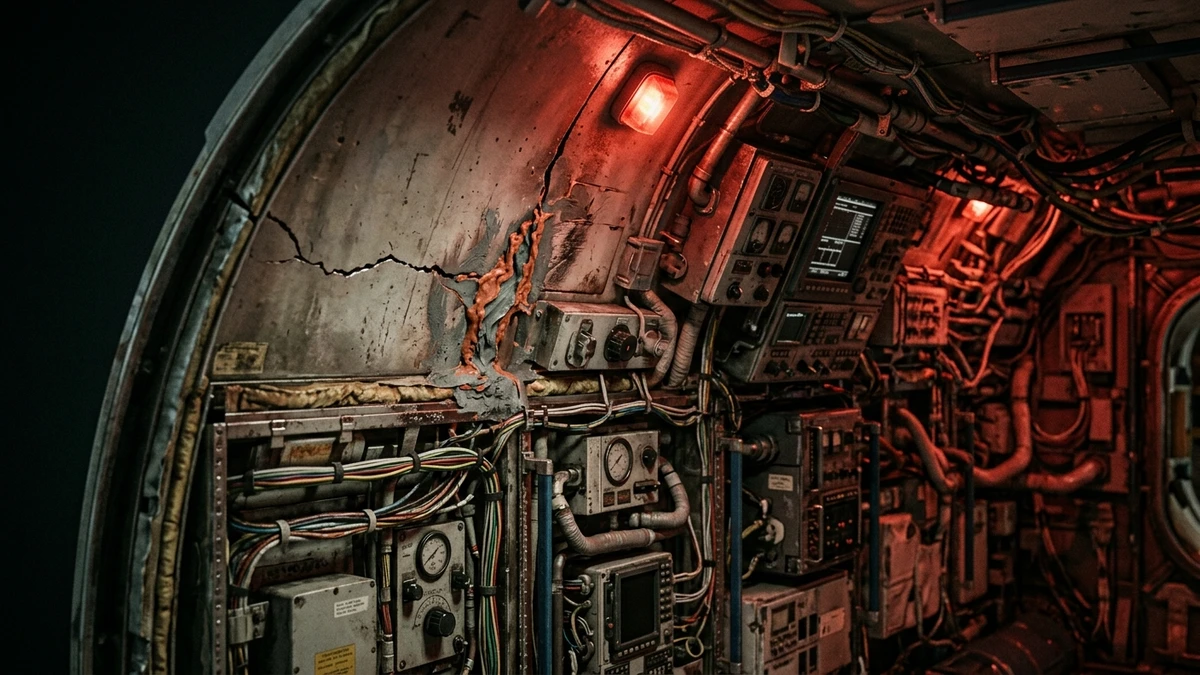
The PrK tunnel leak was first detected in 2019. At the time, it was small: a slow hiss of air that engineers initially attributed to a faulty hatch seal. Over subsequent months and years, pressure checks revealed the problem was structural. Cracks in the tunnel's hull — likely caused by material fatigue, micro-meteorite impacts, or thermal expansion cycles over decades of constant heating and cooling in orbit — were letting air seep out.
Roscosmos has applied hermetic sealant multiple times. The fixes have never been permanent. By 2024 the leak rate had grown measurably, and by 2025 it was consuming a meaningful fraction of the station's air resupply budget — meaning Progress cargo ships were having to haul extra oxygen to compensate. The June 5 incident, where the rate jumped sharply during docking operations, was the most serious escalation yet.
NASA's official line has consistently been that the leak is "manageable." But the language around it has quietly shifted over the past year, from "we're monitoring it" to "we're actively working on mitigation."
Five Astronauts, One 13-Foot Capsule
The capsule the crew sheltered in was the same SpaceX Crew Dragon that brought the Crew-12 expedition to the station back in February — a vehicle roughly 4 metres (13 feet) wide, designed to carry up to seven people on a short flight, but not especially comfortable for five people to wait out an emergency in orbit.
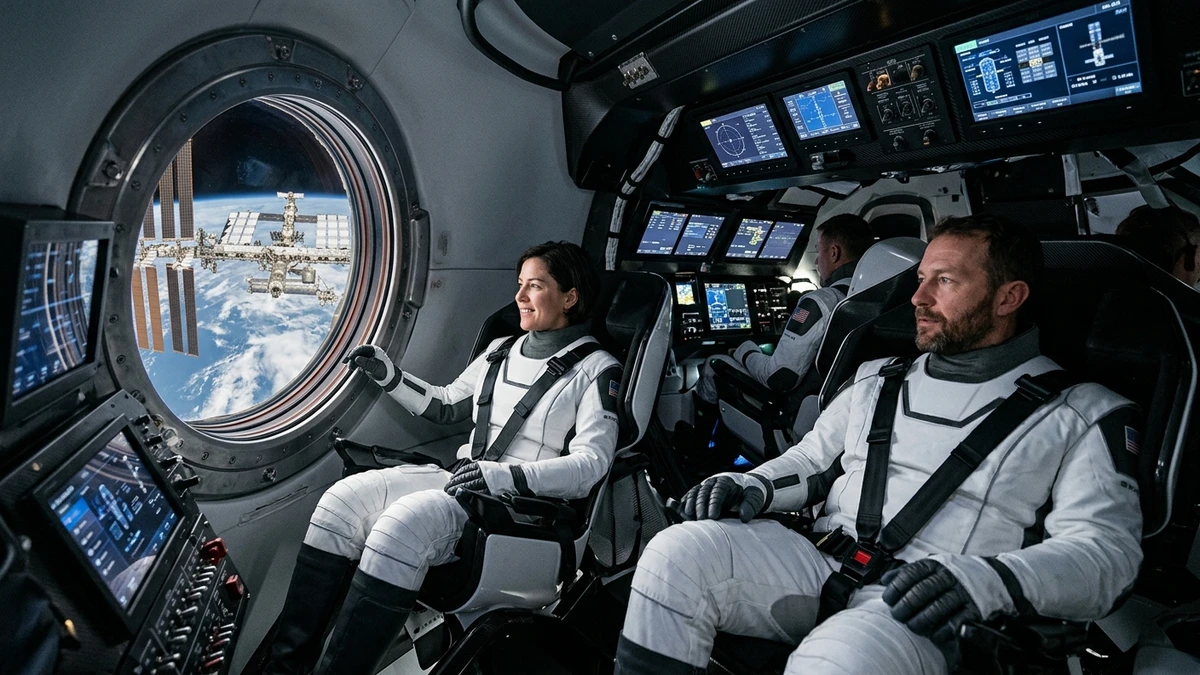
This is actually a well-rehearsed procedure. Both the Crew Dragon and the Russian Soyuz capsule function as lifeboats — they're kept ready to depart at short notice. The fact that the crew could shelter and be ready to leave within minutes is a testament to how seriously NASA and its partners take emergency preparedness.
For the crew themselves, it would have been an unsettling experience. Astronauts train for emergencies, but sitting in a capsule waiting to hear whether you need to leave a crewed orbital lab is a different kind of tension from a simulation.
The Repair Attempt
While the five crew members waited in the Dragon, Russian cosmonauts in the Zvezda module devised a plan to cut through a bracket that was blocking access to the suspected crack source. This kind of physical modification — cutting into the station's own structure to reach a problem area — illustrates just how seriously Roscosmos is now treating the situation.
Pressure checks during the repair revealed two distinct leak points. One was successfully sealed with a hermetic compound. Work on the second was paused when engineers asked for more time to review the data before proceeding.
As of June 7, the second leak point remains unsealed, and the station is continuing to lose air at a rate that requires monitoring. There is no immediate danger to the crew, but "no immediate danger" and "the problem is solved" are very different things.
What This Means for the Station's Future
The ISS is scheduled for a controlled deorbit in January 2030. NASA has contracted SpaceX to build a de-orbit vehicle — essentially a large propulsion tug that will guide the 420-tonne station to a targeted re-entry over the South Pacific Ocean, well away from populated land.
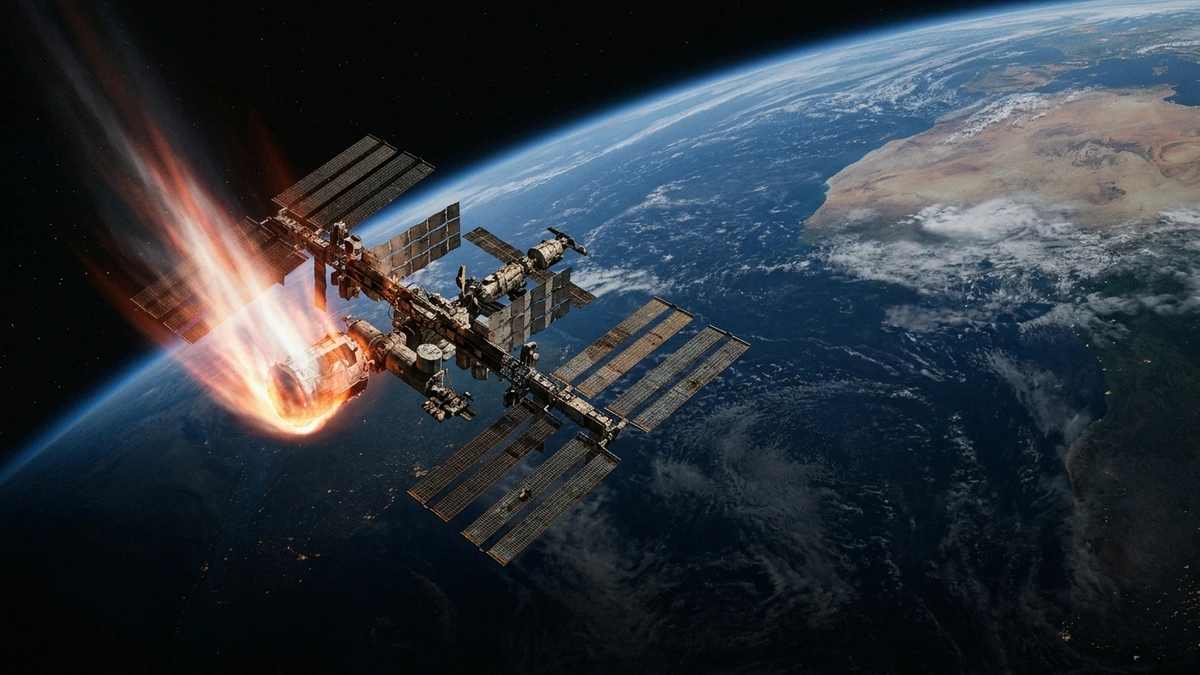
That gives the station roughly three and a half more years of operational life. The question is not whether it will make it to 2030 — NASA believes it will — but at what cost, and with what risk.
An accelerating crack in a key structural module is exactly the kind of problem that makes that calculation harder. Every additional seal, every emergency shelter procedure, every kilogram of extra oxygen sent up to compensate for lost air: it all adds up. The station was designed for a 15-year lifespan and has been operating for 25.
It's also worth noting what replacing the ISS looks like. NASA and its commercial partners are developing the next generation of orbital stations — Axiom Space's commercial modules, a potential Starlab station backed by Voyager Space and Airbus, and others — but none of them are operational yet. There's a gap coming, and every incident that shortens the ISS's viable life narrows that window.
The Bottom Line
The June 5 air leak and shelter event is not a catastrophe. The station is still operational, the crew is safe, and the immediate problem has been partially addressed. But it is a clear signal that the International Space Station is ageing in ways that are becoming harder to manage.
For 25 years, the ISS has been humanity's continuous foothold in space — a permanent outpost where people have lived and worked without interruption since November 2000. The sight of five astronauts filing into a SpaceX capsule to wait out a worsening crack in the Russian hull is a reminder that that era is drawing to a close. Not with a bang, but with the slow accumulation of hairline fractures in decades-old metal.
The station will almost certainly reach 2030. But incidents like this are going to become more frequent, not less, as it ages. The question worth watching now is how NASA manages the final years — and whether the commercial successors will be ready in time.
Sources:
- Astronauts on ISS take shelter in SpaceX Dragon as cosmonauts try to fix air leak — Space.com
- NASA directs its ISS crew members to board spacecraft amid leak repair attempt — CNN
- NASA reverses evacuation alert for astronauts aboard ISS — CBC News
- ISS Astronauts Ordered to Shelter in SpaceX Crew Dragon — Michael R. Cronin